CANADA — Connectica reporting
The Carney government's budget promises to end homelessness within a decade and puts $11.2 billion behind it, but researchers and one of the country's best-known writers on the issue say the plan's scale and design may fall short.
Prime Minister Mark Carney's government used its second budget, tabled last week, to make a headline promise: put Canada on a path to end homelessness within 10 years. The budget proposes an $11.2-billion cash injection to tackle homelessness, described in one account as among the year's largest line items. Carney is not the first Canadian leader to set such a target, and the plan arrives as affordability and housing availability weigh on households across the country.
The scale of the problem is documented in a national homelessness count conducted in 2025, which found more than 65,000 people homeless on a given night in Canada — a 59 per cent increase over five years. The same count found the share of unhoused people living in unsheltered locations, including encampments, had risen from 23 per cent to 27 per cent. Commentators trace the trend to overlapping pressures: a long-standing shortfall in social housing funding, tight rental supply, the pandemic and its aftermath, inflation and the cost of living, and the opioid epidemic.
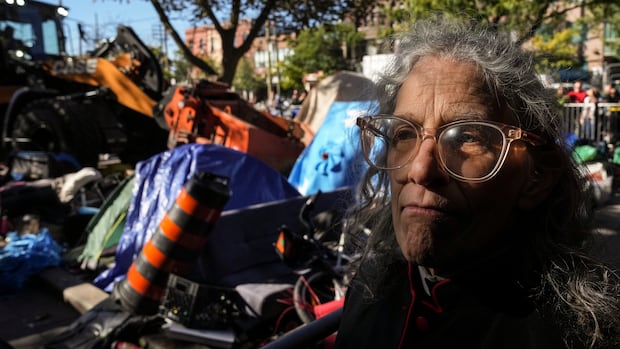
Maggie Helwig, whose book Encampment won this year's Shaughnessy Cohen Prize for political writing and which Carney said earlier this year he was reading, told CBC's Rosemary Barton that the commitments are serious and constructive but "not at a scale which would end homelessness." She said a significant reduction in homelessness, especially unsheltered homelessness, would itself be a big deal. Helwig also cautioned against over-emphasizing mental health and addictions as the primary drivers of homelessness, arguing that many people simply need housing they can afford, and pointed to Toronto's Dunn House as a model that pairs housing with direct access to doctors, nurses and other health professionals.
The Liberal government's earlier attempt is the reference point for much of the current debate. In 2017, Justin Trudeau's government set a goal of halving chronic homelessness over the following decade, when roughly 25,000 people were estimated to be chronically homeless, and a 2020 throne speech went further by pledging to eliminate chronic homelessness entirely. A federal progress report released last December acknowledged a 34 per cent increase in chronic homelessness among shelter users between 2016 and 2024.
The Carney plan keeps two elements of the Trudeau-era strategy: renewed funding for the Canada Housing Benefit, a rent supplement for low-income Canadians, and continued funding for Reaching Home, which directs money to communities. On top of that, the government is adding three capital funds — $10 billion for supportive and transitional housing, $5 billion for "integrated supports" projects and $2 billion for new health-care infrastructure — and directing new money to Build Canada Homes to boost construction of non-market housing. The reports describe the funding in different ways: one frames the homelessness commitment as an $11.2-billion injection, while the other lists the three capital funds, which total $17 billion, without stating whether they sit inside that figure.
The plan also rests on what the government calls a renewed partnership with the provinces, with Ottawa funding capital construction and provinces covering operations and services. Manitoba has already signed on: the federal government committed $800 million toward 2,000 supportive and transitional homes and $200 million toward a new centre for mental health and addictions, with the province funding operations for both and covering half the cost of building the centre. Mayors in Vancouver, Victoria and Montreal have endorsed the federal goal.
Tim Richter, president and CEO of the Canadian Alliance to End Homelessness, said the Carney approach differs from the Trudeau one in setting a much bigger target and leading with a major capital infusion alongside talks with the provinces. He described the sequence of first steps as important. Nick Falvo, a researcher and consultant focused on homelessness, called the plan a very impressive down payment that showed great leadership, but said the open question is operational funding — the ongoing costs provinces would have to be willing to cover. Falvo also said the earlier national housing strategy lacked emphasis on supportive housing, which he described as deeply subsidized housing with substantial social work support.
In Winnipeg, Carney said there is no simple answer and that hard problems demand humility in learning from previous well-intentioned efforts that fell short, as well as the resolve to build on what has succeeded. He said governments have spent decades trying to address homelessness but that those efforts were too often inadequately resourced, poorly co-ordinated and not sustained. Helwig said she is less focused on whether the plan ends all homelessness than on whether it helps people sleeping on the streets now, and that framing the issue in terms of community and care matters in itself after years of stigmatizing language.
Reported with files from CBC News Politics.
Connectica provides information only, not financial, investment or legal advice.